Jonesboro, GA · Clayton County
Basement Water Removal in Jonesboro, GAEmergency Basement Flooding & Basement Drying Services
Basement Water Removal in Jonesboro runs from basement water pump out and basement drying services to basement dehumidification.
Answered 24/7
Reliable Basement Water Removal Near Jonesboro, Georgia
A basement that looks dry a day after a flood in Jonesboro can still hold a lot of water in the slab, the bottom of the walls and under flooring. That hidden water causes the musty smell many basements have.
In Jonesboro, when a basement or below-grade room takes on water, it usually follows heavy rain, a sewer backup or a burst pipe. Local basement drying experts serve Jonesboro, Morrow, Riverdale and Lovejoy, pumping water out and drying the space.
Basement Water Removal Services in Jonesboro
Emergency Basement Flooding
Emergency response starts with making power safe, stopping the source if possible and pumping out the water.
Basement Drying Services
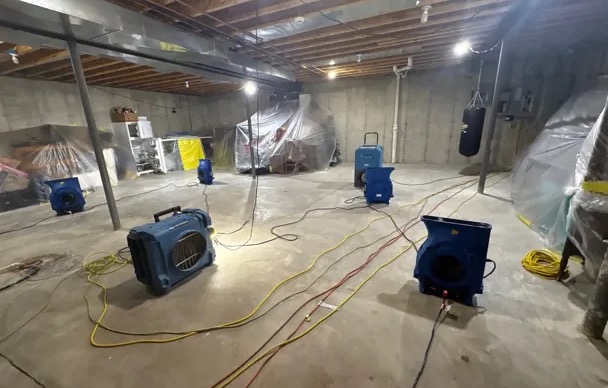
After pumping, air movers and dehumidifiers dry the walls, framing and slab. Readings are taken daily until every surface is back to normal.
Basement Moisture Inspection
Moisture meters and thermal cameras check walls, floors and the slab for water that is not visible, including behind finished walls.
Basement Floor Water Damage
Water on a basement floor soaks into carpet pad, laminate seams and the concrete itself. Floor coverings are lifted where needed so the slab can dry.
Basement Dehumidification
Dehumidifiers run continuously during drying, and their output is checked to track how much water is still coming out of the materials.
Common Symptoms Requiring Basement Water Removal
High Humidity and Condensation
Water on pipes and windows, or a constantly clammy feel, means basement humidity is too high.
Musty Odors and Mold Smell
A musty or damp smell in the basement points to wet materials hidden somewhere in the space.
Water Stains on Walls or Ceiling
Stains on lower walls or the ceiling below a bathroom or kitchen point to a leak.
Mold or Mildew
Dark spots on drywall, framing or stored items mean the area has stayed wet for days.
How Basement Water Removal Works in Jonesboro
Step 1: Emergency Water Extraction
Power is made safe, then pumps and extractors remove standing water from the basement floor.
Step 2: Detailed Moisture Inspection
Meters map wet walls, framing and slab areas, including behind finished walls and under flooring.
Step 3: Drying and Dehumidification
Air movers and large dehumidifiers run continuously, with readings checked every day.
Step 4: Final Verification and Monitoring
Readings are compared to dry areas, and equipment is removed only when the basement tests dry.
Sources of Basement Water Problems
Sewer Line Backups and Blockages
A blocked sewer line can push wastewater up through basement floor drains and toilets.
Appliance Malfunctions and Overflows
Washers, utility sinks and water softeners in the basement can overflow or leak.
Heavy Rainfall and Storm Flooding
Heavy rain saturates the soil and pushes water through walls, cracks and the floor joint.
Clogged or Damaged Gutters
Clogged gutters and short downspouts dump roof water right next to the foundation.
Professional Basement Water Removal for All Properties
Residential Basement Water Removal
In homes, a wet basement often means damaged carpet, drywall and stored belongings, plus a furnace or water heater sitting in water. Water is pumped out and the space dried.
Commercial Basement Water Removal
In commercial buildings, basements often house mechanical rooms and storage. Water is removed so systems can be checked to determine whether they can be restarted safely.
The Risks of DIY Basement Water Removal
A small puddle on bare concrete can be handled with a wet vac, towels and a dehumidifier. Call local basement drying experts if water reached carpet, drywall or framing, or covers much of the floor.
Understanding Basement Water Removal Pricing
Waterproofing and drainage work are separate costs. In Jonesboro, they may be needed to stop the next flood.
Contamination Level
Sewage or dirty water needs protective gear, removal and disinfection, which costs more.
Additional Services
Antimicrobial treatment, contents cleaning and repairs after drying add to the cost.
Water Depth and Volume
Deeper water takes more pumping time and usually means more materials got wet.
Does Insurance Cover Basement Water Removal?
Flooding from outside water usually needs separate flood insurance. Water from a broken pipe or appliance inside is more often covered.
Why Jonesboro Homeowners Trust Local Pros for Basement Water Removal
Contamination Safety Protocols
Sewage and dirty water are handled with protective gear, containment and disinfection.
Detailed Damage Documentation
Photos, readings and drying logs are kept to support your insurance claim.
Clear Communication
You get plain updates on what was found, what was removed and how drying is going.
Emergency Basement Flood Response in Jonesboro
Water still rising in the basement? Call (470) 722-8241 now for basement water removal in Jonesboro before the water reaches finished rooms and stored belongings.
Call Now (470) 722-8241Local Basement Water Removal Coverage for Morrow, Riverdale and Lovejoy
Help with basement water removal is also available in communities near Jonesboro, including Morrow, Riverdale and Lovejoy, for flooded basements and sewer backups.
- Basement Water Removal in Morrow
- Basement Water Removal in Riverdale
- Basement Water Removal in Lovejoy
- Basement Water Removal in Forest Park
- Basement Water Removal in Stockbridge
- Basement Water Removal in Hampton
- Basement Water Removal in Fayetteville
- Basement Water Removal in College Park
- Emergency Damage Restoration in 30236
- Storm Damage Restoration in 30236
- Water Damage Restoration in 30236
- Water Extraction Service in 30236
- Water Leak Detection in 30236
- Water Removal Service in 30236
- Emergency Damage Restoration in 30237
- Storm Damage Restoration in 30237
Frequently Asked Basement Water Removal Questions
How does a basement moisture inspection work?
Moisture meters and thermal cameras check walls, floors and the slab, including behind finished walls and under flooring.
What is involved in basement water removal?
Making power safe, pumping out standing water, extracting floors and carpet, removing soaked materials and dehumidifying until dry.
How long does basement drying take?
Often several days or longer, because concrete and cool basement air hold moisture. Daily readings show when it is done.
How is contaminated water handled in a basement?
With protective gear, containment, removal of porous materials and disinfection of hard surfaces before drying.
Can I dry my basement myself with fans?
Fans help with surface water, but walls and concrete need dehumidifiers and readings to dry fully.