Lawrenceville, GA · Gwinnett County
Basement Water Removal in Lawrenceville, GABasement Dehumidification & Basement Wall Drying
Basement Water Removal in Lawrenceville covers basement water pump out, basement wall drying and basement dehumidification after a flood.
Answered 24/7
Basement Water Removal Solutions for Lawrenceville Homeowners
Basement Water Removal in Lawrenceville starts with safety. Water near the furnace, water heater or electrical panel can be dangerous, so power is made safe before anyone steps into it.
A single storm or burst pipe in Lawrenceville can flood a basement. Local water extraction experts serve Lawrenceville and nearby Grayson, Snellville and Suwanee, with help available around the clock.
Professional Basement Water Removal Offerings
Basement Dehumidification
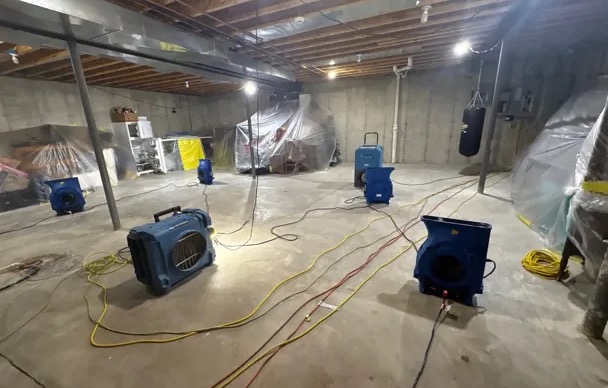
Dehumidifiers run continuously during drying, and their output is checked to track how much water is still coming out of the materials.
Basement Wall Drying
Opening the bottom of finished walls lets air reach the studs and sill plate, which otherwise stay wet behind the drywall.
Basement Drying Services
Equipment stays until the basement reads dry, not just until it looks dry. Removing it early lets dampness return.
Emergency Basement Flooding
Emergency response starts with making power safe, stopping the source if possible and pumping out the water.
Sump Pump Failure Water Cleanup
A backup pump or battery system is worth discussing with a plumber after the cleanup, since sump failures often repeat in storms.
Common Symptoms Requiring Basement Water Removal
Gurgling Sounds From Drains
Gurgling floor drains or slow drains can be an early sign of a sewer line problem.
Efflorescence on Concrete Walls
White, powdery deposits on concrete walls mean water is passing through the masonry.
Water Stains on Walls or Ceiling
Stains on lower walls or the ceiling below a bathroom or kitchen point to a leak.
Warped or Buckling Flooring
Flooring that buckles, lifts or feels spongy has water trapped between it and the slab.
How Basement Water Removal Works in Lawrenceville
Step 1: Emergency Water Extraction
Power is made safe, then pumps and extractors remove standing water from the basement floor.
Step 2: Detailed Moisture Inspection
Meters map wet walls, framing and slab areas, including behind finished walls and under flooring.
Step 3: Drying and Dehumidification
Air movers and large dehumidifiers run continuously, with readings checked every day.
Step 4: Final Verification and Monitoring
Readings are compared to dry areas, and equipment is removed only when the basement tests dry.
Common Causes of Basement Water Damage in Lawrenceville
Clogged or Damaged Gutters
Clogged gutters and short downspouts dump roof water right next to the foundation.
Sewer Line Backups and Blockages
A blocked sewer line can push wastewater up through basement floor drains and toilets.
Improper Landscape Grading
Soil that slopes toward the house directs rainwater straight to the basement walls.
Plumbing Leaks or Pipe Bursts
Supply lines, drain pipes and water heaters in the basement can leak or burst onto the floor.
Residential and Commercial Basement Water Removal in Lawrenceville
Residential Basement Water Removal
In homes, a wet basement often means damaged carpet, drywall and stored belongings, plus a furnace or water heater sitting in water. Water is pumped out and the space dried.
Commercial Basement Water Removal
In commercial buildings, basements often house mechanical rooms and storage. Water is removed so systems can be checked to determine whether they can be restarted safely.
Basement Water Removal vs. DIY: When to Call the Pros
A small puddle on bare concrete can be handled with a wet vac, towels and a dehumidifier. Call the experts if water reached carpet, drywall or framing, or covers much of the floor.
Basement Water Removal Cost in Lawrenceville, GA
Waterproofing and drainage work are separate costs. In Lawrenceville, they may be needed to stop the next flood.
Contamination Level
Sewage or dirty water needs protective gear, removal and disinfection, which costs more.
Access and Complexity
Narrow stairs, low ceilings and crowded storage areas make the work slower and longer.
Basement Square Footage
Larger basements need more extraction, more drying equipment and more days of drying.
Does Insurance Cover Basement Water Removal?
Ask your adjuster early how your policy treats seepage and sewer backups, since many policies limit or exclude both kinds of water.
Advantages of Local Basement Water Removal Experts
Industry Drying Standards
Water removal and drying follow industry water damage standards, with readings at every visit.
Contamination Safety Protocols
Sewage and dirty water are handled with protective gear, containment and disinfection.
Methodical Water Removal Process
Water is removed in a set order: pump-out, extraction, removal of soaked materials, then drying.
24/7 Emergency Basement Water Removal in Lawrenceville
Storm night, weekend or holiday, the experts handle basement water in Lawrenceville. Call (470) 722-8241 to get pumps running and drying started.
Call Now (470) 722-8241Local Basement Water Removal Coverage for Grayson, Snellville and Suwanee
Nearby areas served for basement water removal include Grayson, Snellville and Suwanee, with the same pumping and drying steps used in Lawrenceville.
- Basement Water Removal in Grayson
- Basement Water Removal in Snellville
- Basement Water Removal in Suwanee
- Basement Water Removal in Duluth
- Basement Water Removal in Loganville
- Basement Water Removal in Lilburn
- Basement Water Removal in Norcross
- Basement Water Removal in Buford
- Emergency Damage Restoration in 30042
- Storm Damage Restoration in 30042
- Water Damage Restoration in 30042
- Water Extraction Service in 30042
- Water Leak Detection in 30042
- Water Removal Service in 30042
- Emergency Damage Restoration in 30043
- Storm Damage Restoration in 30043
Basement Water Removal in Lawrenceville: Your Questions
What is involved in basement water removal?
Making power safe, pumping out standing water, extracting floors and carpet, removing soaked materials and dehumidifying until dry.
What happens during basement moisture control?
Dehumidifiers and air movers keep humidity low while materials dry, and readings confirm when the space is normal.
How does a basement moisture inspection work?
Moisture meters and thermal cameras check walls, floors and the slab, including behind finished walls and under flooring.
Why is basement dehumidification important after pumping?
Walls and concrete keep releasing moisture for days. Dehumidifiers remove it so the basement does not stay damp.
What is involved in basement leak cleanup?
Stopping the leak, extracting the water, drying the floor and walls and checking for hidden moisture under flooring.