Senoia, GA · Coweta County
Basement Water Removal in Senoia, GABasement Floor Water Damage & Basement Wall Drying
Basement Water Removal in Senoia runs from basement water pump out and basement drying services to basement dehumidification.
Answered 24/7
Reliable Basement Water Removal Near Senoia, Georgia
Basement Water Removal in Senoia protects more than the floor. Furnaces, water heaters, washers and stored belongings in the basement can all be damaged by standing water.
A single storm or burst pipe in Senoia can flood a basement. Local water damage pros serve Senoia and nearby Sharpsburg, Peachtree City and Fayetteville, with help available around the clock.
The Basement Water Removal Process in Senoia
Basement Floor Water Damage
Flooring that buckled or swelled is removed. Tile and sealed concrete can often be cleaned and dried in place.
Basement Wall Drying
Opening the bottom of finished walls lets air reach the studs and sill plate, which otherwise stay wet behind the drywall.
Emergency Basement Flooding
Emergency response starts with making power safe, stopping the source if possible and pumping out the water.
Sump Pump Failure Water Cleanup
Cleanup after a sump failure includes drying the area around the pit and noting whether the pump, switch or power was the cause.
Basement Water Pump Out
A pump-out removes standing water from the basement with submersible pumps, discharging it outside and away from the foundation.
Indicators You Need Professional Water Removal
Gurgling Sounds From Drains
Gurgling floor drains or slow drains can be an early sign of a sewer line problem.
Standing Water in Basement
Standing water anywhere on the basement floor needs to be pumped out before it soaks the walls.
Wet or Damp Basement Walls
Basement walls that look dark, feel damp or show tide lines are taking on or holding water.
Rusted Appliances or Furniture
Rust on appliance bases, furniture legs or metal shelving points to standing water or long-term dampness.
How Basement Water Removal Works in Senoia
Step 1: Emergency Water Extraction
Power is made safe, then pumps and extractors remove standing water from the basement floor.
Step 2: Detailed Moisture Inspection
Meters map wet walls, framing and slab areas, including behind finished walls and under flooring.
Step 3: Drying and Dehumidification
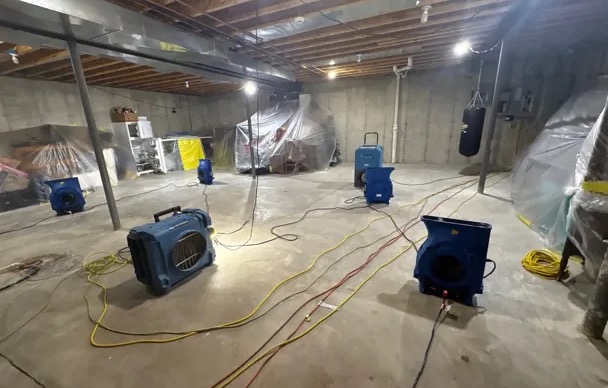
Air movers and large dehumidifiers run continuously, with readings checked every day.
Step 4: Final Verification and Monitoring
Readings are compared to dry areas, and equipment is removed only when the basement tests dry.
Sources of Basement Water Problems
High Water Table and Hydrostatic Pressure
A high water table presses groundwater against the slab and walls, forcing it inside.
Foundation Cracks and Seepage
Cracks in foundation walls and the slab let groundwater seep in during wet weather.
Plumbing Leaks or Pipe Bursts
Supply lines, drain pipes and water heaters in the basement can leak or burst onto the floor.
Clogged or Damaged Gutters
Clogged gutters and short downspouts dump roof water right next to the foundation.
House and Business Basement Water Removal in Senoia
Residential Basement Water Removal
Finished basements used as bedrooms or family rooms need careful moisture checks behind walls and under flooring, since that is where water hides.
Commercial Basement Water Removal
Businesses with below-grade storage need wet inventory moved out and documented. Drying is planned around daily operations wherever possible.
Why DIY Basement Water Removal Often Fails in Senoia
Fans by themselves can spread damp basement air through the rest of the house. Basement drying needs dehumidifiers that pull moisture out of both the air and the concrete.
Basement Water Removal Cost in Senoia, GA
The pros look at water depth, water type and basement finishes before pricing basement water removal in Senoia, then explain the scope.
Water Depth and Volume
Deeper water takes more pumping time and usually means more materials got wet.
Drying Time Required
Basements dry slowly, and each extra day of equipment adds to the total.
Affected Materials
Finished walls, carpet and laminate take more removal work than bare concrete.
Does Insurance Cover Basement Water Removal?
Flooding from outside water usually needs separate flood insurance. Water from a broken pipe or appliance inside is more often covered.
The Value of Professional Basement Water Removal
Advanced Drying Equipment
Pumps, extractors and large dehumidifiers remove water much faster than household tools.
Contamination Safety Protocols
Sewage and dirty water are handled with protective gear, containment and disinfection.
Clear Communication
You get plain updates on what was found, what was removed and how drying is going.
Round-the-Clock Basement Water Removal for Senoia
The faster a basement is pumped out, the more can be saved. Call (470) 722-8241 for basement water removal in Senoia as soon as you see water.
Call Now (470) 722-8241Basement Water Removal Near Senoia: Areas Served
Besides Senoia, local water damage pros handle basement pump-outs, wall drying and dehumidification in nearby Sharpsburg, Peachtree City and Fayetteville.
- Basement Water Removal in Sharpsburg
- Basement Water Removal in Peachtree City
- Basement Water Removal in Fayetteville
- Basement Water Removal in Tyrone
- Basement Water Removal in Newnan
- Basement Water Removal in Palmetto
- Basement Water Removal in Hampton
- Basement Water Removal in Fairburn
- Emergency Damage Restoration in 30276
- Storm Damage Restoration in 30276
- Water Damage Restoration in 30276
- Water Extraction Service in 30276
- Water Leak Detection in 30276
- Water Removal Service in 30276
Frequently Asked Basement Water Removal Questions
What happens during basement moisture control?
Dehumidifiers and air movers keep humidity low while materials dry, and readings confirm when the space is normal.
Does basement flood cleanup include mold prevention?
Fast drying is the main prevention. Wood and concrete that stayed wet can be treated with an antimicrobial once dry.
What is involved in basement leak cleanup?
Stopping the leak, extracting the water, drying the floor and walls and checking for hidden moisture under flooring.
What is the difference between a pump out and extraction?
A pump out removes deep standing water. Extraction pulls the remaining water from carpet, pad and floors.
How does a basement moisture inspection work?
Moisture meters and thermal cameras check walls, floors and the slab, including behind finished walls and under flooring.